

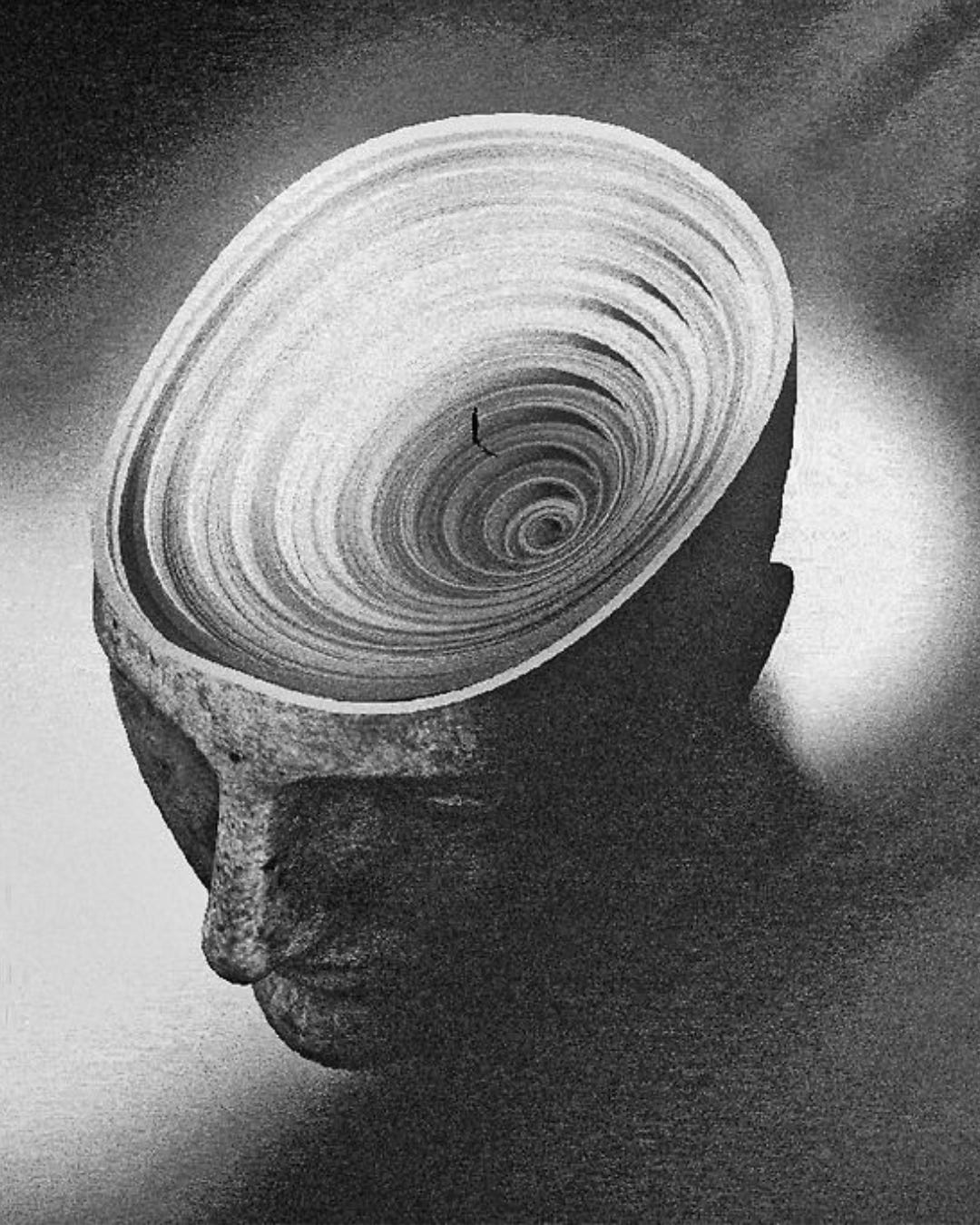
“When we awaken, we resonate at the same frequency as all of nature on Earth. We rejoin life.” — Dr. Lisa Miller
Most of us were taught that depression is a disorder, something to diagnose and treat. Dr. Lisa Miller spent decades at Columbia asking whether it might sometimes be something else entirely, a signal that a capacity we were never taught to develop is trying to come to the surface. That idea is what drew me to her book The Awakened Brain, which Miller came to not through academic curiosity but through her own experience of the low-grade emptiness her patients described, what clinicians call dysthymia, and what she found changed how she understood both depression and the brain.
Achieving vs. Awakened Awareness
Miller argues we have two foundational modes of awareness: achieving and awakened. Most of us run almost entirely on achieving awareness, the focused, goal-driven perception that organizes life around a single question: how can I get and keep what I want? It’s useful, even necessary, but when it’s the only mode we operate from, it narrows our perception and we become isolated, controlling, never quite satisfied, and blind to information that doesn’t serve our immediate goals. In awakened awareness, instead of seeing ourselves as makers of our path, we become seekers of it, looking across the full landscape and asking, what is life showing me now? A 2019 fMRI study in Cerebral Cortex showed that when people recalled spiritual experiences, regardless of tradition, the parietal cortex showed reduced activity, as though the boundary between self and world was softening at the neurological level.
The shift from achieving to awakened awareness is not a philosophical preference or a spiritual aspiration, but a distinct neurological state with a specific brain signature, and it can be cultivated through practice. Miller’s epidemiological research at Columbia found that a sustained personal spiritual life is profoundly protective against depression, with adolescents showing 35 to 75 percent lower risk, and children who shared a spiritual life with a parent showing 80 percent lower risk, tied to personal devotion rather than church attendance. A 2014 study in JAMA Psychiatry found that adults who rated spirituality as highly important had significantly thicker cortices in the same regions that thin in people with recurrent depression. Twin studies by her colleague Kenneth Kendler showed that 29 percent of our capacity for spiritual experience is genetic, while the remaining 71 percent depends on how we’re raised and what we practice. We are born with a neural “docking station” for spiritual awareness, and whether it develops depends on whether anyone helps us turn it on.
That raises an uncomfortable question about our entire mental health infrastructure, which right now is organized around the assumption that when someone is suffering, the problem is chemical or cognitive. Miller’s research suggests that in many cases, the suffering is a signal that a fundamental human capacity has been neglected, that the depression is the alarm telling you that your awakened brain has been starved. If that’s true, then a therapist who only asks what you’re feeling and why is working with an incomplete picture, and would also need to assess whether you have access to awakened awareness at all, whether anyone ever helped you develop it, and whether the narrowing of your perception into pure achieving mode is itself the source of your distress. The antidote would be spiritual, helping you to rejoin the resonance of life.
Synchronicities as Guidance
The most compelling part of the book for me is where Miller shares her own experience of struggling between the two modes of awareness. She vulnerably shares her personal fertility journey, explaining how after years of struggling to conceive, synchronicities began appearing in her life that nudged her slowly to adopt (she ended up being able to conceive as part of the journey). She writes about a presence that visited her, a charged brightness in the room, before the adoption of her first child and again before the birth of her second. She describes a phone call that arrived on her answering machine in New York while she was at a medicine ceremony in South Dakota, a call saying they had found “Miller’s child” while she prayed in a circle of women.
Explaining how life surprises us with its twists and turns through synchronicity, Miller borrows the term “trail angels” from long-distance hikers, who use it for strangers who show up with food and shelter at just the right moment. She applies it to the people who nudge us toward the open door we hadn’t yet seen. Her own life became a case study: the phone call about “Miller’s child” arriving on her answering machine in New York while she prayed in a medicine ceremony in South Dakota, the charged brightness that appeared in her room before both her children arrived. These aren’t the kinds of experiences that show up in clinical intake forms, and yet they were central to the most consequential decisions of her own life, and the lives of many of her patiences. Guidance, in Miller’s framing, isn’t only something that comes from within, but also arrives through the synchronicities we learn to notice when we stop gripping our plans so tightly, and her data suggests that the capacity to perceive it is trainable rather than random.
Depression as a Call for Spiritual Meaning
If the awakened brain really is our innate endowment, and Miller’s data strongly suggests it is, then we are looking at a measurable human capacity that our culture systematically underdevelops in nearly every child. The way we raise children, train therapists, and respond when someone reports an experience that doesn’t fit the materialist framework, all of it is either developing this capacity or quietly extinguishing it.
Consider what Miller’s research implies for how we currently handle a teenager who reports feeling empty and disconnected: we screen for depression, we may prescribe medication, we refer to talk therapy, but we almost never ask whether anyone has helped them develop access to the mode of awareness that Miller’s own studies show is protective against the very condition we’re diagnosing. The question is no longer whether awakened awareness is real, but what it means that we’ve been treating its absence as a chemical problem, rather than a spiritual one.
Intuitive Intelligence Practice
Finding the Yellow Door (adapted from Dr. Lisa Miller)
Miller designed this visualization to reveal the difference between achieving and awakened awareness: when we’re operating from achieving awareness alone, we see obstacles blocking our path, but when we engage our awakened attention, those same obstacles often turn out to be redirections toward something we couldn’t have planned.
Close your eyes. Take a few slow breaths and let yourself settle.
Call to mind a time when you really wanted something and it didn’t work out. A job, a relationship, an acceptance letter, a plan you were convinced was right. Imagine yourself standing in front of a red door, pulling the handle, and finding it stuck. Feel the frustration of that moment.
Now imagine that you turned around, and behind you was an open yellow door. You crossed over to it, and on the other side was something you hadn’t planned for but that turned out to be more right for you than what you had wanted.
Sit with what came through that yellow door. A person, a path, a version of your life that you couldn’t have designed.
Now ask yourself: was there someone who helped you make that turn? A friend, a stranger, a conversation that nudged you toward what was open? Miller calls these people “trail angels.” Notice who yours was.
Finally, sit with this: where in this story was the guidance? Was it in the stuck red door? Was it in the open yellow door? Was it in the trail angel? What did it lead you to that you did not expect?
Still Curious?
Dr. Lisa Miller on Know Thyself Podcast, “The Neuroscience of Spirituality, Synchronicity & The Awakened Brain.” Miller walks through how transcendent experiences show up in the brain, the science behind synchronicity, and what it means to be a “trail angel” for someone else.
Nina Guilbeault, PhD is a coach, author, and intuitive who helps individuals and organizations develop their Intuitive Intelligence.
I'm curious how you incorporate Lisa's work into your own coaching practice.